
Paying for non-medical in-home care in Indiana comes down to four main paths: Indiana Medicaid waivers (PathWays for Aging or the Health & Wellness Waiver), VA benefits, long-term care insurance, and private pay. Most Central Indiana families end up combining two or more of these to cover the full cost of care.
Indy In-Homecare works with families across Indianapolis, Hamilton, Hendricks, Johnson, and Marion counties every week who are asking the same question: “How do we actually pay for this?” This guide breaks down every legitimate funding source available to Hoosier families in 2026, with the specific income limits, program names, and eligibility rules you need to plan with confidence.
What Is Non-Medical In-Home Care and What Does It Cover in Indiana?

Non-medical in-home care refers to hands-on personal assistance and household support delivered in a senior’s own home by a trained caregiver, rather than skilled nursing or medical treatment. It covers activities of daily living and light household tasks that allow an aging adult to remain safely at home instead of moving to a facility.
In Indiana, licensed home care agencies like Indy In-Homecare typically provide:
- Personal care — bathing, dressing, grooming, toileting, and mobility assistance
- Meal preparation — planning and cooking meals around dietary restrictions
- Companion care — supervision, conversation, and engagement to reduce isolation
- Light housekeeping — laundry, tidying, and maintaining a safe living environment
- Medication reminders — prompting (not administering) medications on schedule
- Transportation — rides to medical appointments, pharmacies, and errands
- Respite care — short-term relief for family caregivers, from a few hours to several days
Because this care is non-medical, it is not covered by traditional Medicare, which is a critical distinction Central Indiana families need to understand before they start budgeting.
Does Indiana Medicaid Cover Non-Medical In-Home Care?
Yes — but only through specific Home and Community-Based Services (HCBS) waivers, not through standard Medicaid or Medicare. Indiana’s two primary waiver programs for in-home care are PathWays for Aging (age 60+) and the Health & Wellness Waiver (age 59 and under with a qualifying disability).
Both waivers require the applicant to meet a nursing facility level of care (NF LOC), meaning a state-contracted assessor must determine the person needs the same level of support they would receive in a nursing home, even though the care is delivered at home.
Indiana PathWays for Aging (Ages 60+)
Launched July 1, 2024, Indiana PathWays for Aging replaced the former Aged & Disabled (A&D) Waiver and moved Indiana to a managed long-term services and supports (mLTSS) model.1 Instead of the state managing services directly, enrollees choose a Managed Care Entity (MCE) — an insurance plan — that coordinates their medical care and their in-home support services through a single point of contact. Area Agencies on Aging (AAAs), the PathWays MCEs, and the state’s Level of Care Assessment contractor serve as entry points for applying.2
Because PathWays has capped waiver slots, Indiana currently maintains a waitlist — over 11,000 seniors statewide as of early 2026 — with the state inviting people off the list each month as slots open.3 Families should apply as early as possible, even before care is urgently needed, to secure a place in line. Full details on eligibility and enrollment are available on the PathWays for Aging FAQ page.4
Health & Wellness (H&W) Waiver (Under Age 60)
The Health and Wellness Waiver serves Hoosiers age 59 and younger who have a qualifying disability and meet nursing facility level of care.5 Unlike PathWays, it operates on a more traditional fee-for-service Medicaid model rather than managed care, with a state-approved case manager developing the individual’s plan of care. Both waivers fall under Indiana’s broader Medicaid Home and Community-Based Services (HCBS) program.6
| Program | Who Qualifies | Key Benefits Covered |
|---|---|---|
| PathWays for Aging Waiver | Indiana residents 60+, Medicaid-eligible, meet nursing facility level of care | Attendant care, personal care, Structured Family Caregiving, respite, homemaker services, adult day services, home modifications |
| Health & Wellness (H&W) Waiver | Indiana residents 59 and under with a qualifying disability, meet nursing facility level of care | Attendant care, personal care, respite, homemaker services, case management, community transition support |
| Traditional Medicaid / Hoosier Care Connect | Low-income Hoosiers without waiver enrollment | Medical services only — does not cover non-medical in-home personal care |
Both waivers can also fund Structured Family Caregiving, a program that allows a family member (in many cases, an adult child) to be trained and compensated for providing daily care in the home — a detail many Central Indiana families don’t realize exists until they ask.
What Are the Financial Eligibility Limits for Indiana Medicaid Waivers?

To qualify for PathWays or the Health & Wellness Waiver in 2026, a single applicant’s income generally cannot exceed $2,982 per month, and countable assets cannot exceed $2,000. Applicants must also be assessed and confirmed to require a nursing-facility level of care by a state-contracted evaluator.
Key eligibility factors families should verify before applying:
- Income limit: For HCBS waivers (PathWays and H&W), the 2026 individual income cap is $2,982/month — roughly 300% of the SSI federal benefit rate, the standard threshold used across most states for long-term care Medicaid.7
- Asset limit: $2,000 in countable assets for an individual applicant. A primary home, one vehicle, and certain personal belongings are typically exempt.
- Over-income options: If income exceeds the cap, families can often still qualify by establishing a Qualified Income Trust (Miller Trust) to hold excess income.
- Level of Care (LOC) assessment: Conducted by the state’s Level of Care Assessment contractor in coordination with local Area Agencies on Aging (AAAs) — in Central Indiana, this is typically coordinated through CICOA Aging & In-Home Solutions, the AAA serving the Indianapolis metro area.2
- Married couples: Different income rules apply when only one spouse is applying, including spousal impoverishment protections (see below).
- Processing time: Applications can take up to 90 days, and PathWays currently carries a multi-month-to-multi-year waitlist, so early application matters.
What Other Ways Can Families in Central Indiana Pay for Home Care?
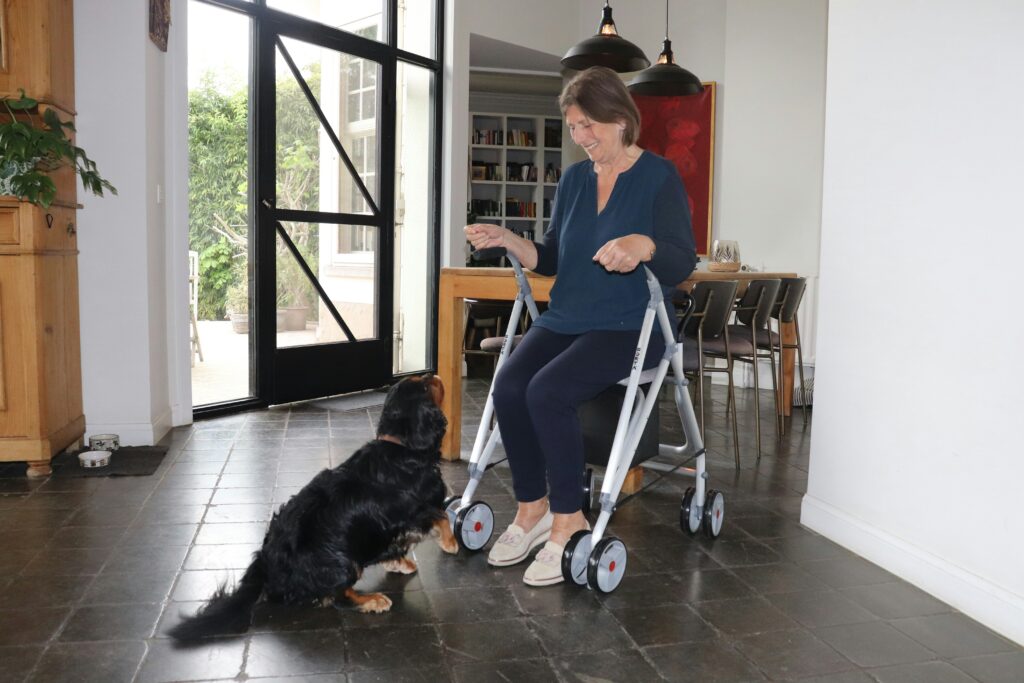
Beyond Medicaid, Central Indiana families commonly pay for in-home care through private pay, long-term care insurance, VA Aid & Attendance benefits, or Medicaid spousal impoverishment protections that shield a healthy spouse’s income and assets. Most families use a blend of these rather than relying on a single source.
- Private Pay: The most immediate option with no waitlist or eligibility review — families pay hourly rates directly, often starting with a few hours a week and scaling up as needs increase. This is frequently used as a bridge while a PathWays application is pending.
- Long-Term Care (LTC) Insurance: Policies purchased in advance of a care need often reimburse for non-medical home care hours. Coverage terms vary widely, so families should review the elimination period and daily benefit maximum in the policy documents.
- VA Aid & Attendance: A needs-based pension benefit for wartime veterans and surviving spouses who require help with daily activities.8 In 2026, it can add up to approximately $2,424/month for a single veteran, roughly $2,874/month for a veteran with a spouse, and about $1,558/month for a surviving spouse — funds that can be applied directly to in-home care costs.9 Eligibility also requires meeting a net worth limit (approximately $163,699 in 2026). See current VA pension rate tables for the latest figures.9
- Spousal Impoverishment Protections: When one spouse needs Medicaid-funded care and the other remains at home, Indiana Medicaid allows the “community spouse” to retain a protected share of income and assets so they aren’t left without resources — an important safeguard for married couples navigating PathWays.
How to Get Started with Indy In-Homecare
Indy In-Homecare helps Central Indiana families sort through Medicaid, VA, and private-pay options during a single free consultation, then builds a personalized care plan around whichever funding sources apply. Most families can move from first call to caregiver match within days.
- Schedule a free in-home assessment. An Indy In-Homecare care coordinator visits the home to evaluate daily living needs, safety risks, and the level of support required.
- Review funding options together. We help you identify whether PathWays for Aging, the Health & Wellness Waiver, VA Aid & Attendance, LTC insurance, or private pay (or a combination) fits your family’s situation, and point you toward the correct AAA or MCE contacts if a Medicaid application is needed.
- Build a custom care plan. Services are matched to your loved one’s needs and budget — from a few hours of weekly companion care to daily personal care support.
- Start care with a matched caregiver. We introduce a caregiver suited to your parent’s personality and needs, with ongoing oversight from our care team as needs change over time.
Indiana’s funding landscape for in-home care is genuinely complex, but no Central Indiana family has to navigate it alone. Contact Indy In-Homecare to schedule your free consultation and get a clear picture of what your family qualifies for.
This article is intended for general informational purposes and reflects Indiana Medicaid and VA benefit figures current as of 2026. Program rules, income limits, and waitlist status change periodically — confirm current details with the Indiana Family and Social Services Administration (FSSA), your local Area Agency on Aging, or a Medicaid planning professional before making financial decisions.
Sources & References
Footnotes
- Indiana Family and Social Services Administration. “Indiana PathWays for Aging.” IN.gov. ↩
- CICOA Aging & In-Home Solutions. “PathWays for Aging Medicaid Waiver Program Indiana.” CICOA.org — Central Indiana’s designated Area Agency on Aging. ↩ ↩2
- Medicaid Planning Assistance. “Indiana PathWays for Aging Program.” American Council on Aging. ↩
- Indiana Family and Social Services Administration. “Indiana PathWays for Aging: Frequently Asked Questions.” IN.gov. ↩
- Indiana Family and Social Services Administration, Division of Disability and Rehabilitative Services. “Health and Wellness and Traumatic Brain Injury Waivers.” IN.gov. ↩
- Indiana Family and Social Services Administration, Division of Disability and Rehabilitative Services. “Medicaid HCBS.” IN.gov. ↩
- Medicaid Planning Assistance. “Indiana PathWays for Aging Program — Financial Eligibility Criteria.” American Council on Aging. ↩
- U.S. Department of Veterans Affairs. “Aid and Attendance Benefits and Housebound Allowance.” VA.gov. ↩
- U.S. Department of Veterans Affairs. “Veterans Pension Rate Tables.” VA.gov. ↩ ↩2