
Senior Isolation & Indiana Home Care: A Guide for Families

Loneliness is more than a feeling — for older adults, it’s a serious health crisis that quietly shortens lives. Here’s what every Indiana family needs to know. Your mother calls less frequently. Your father has stopped attending the weekly church group he loved for thirty years. When you visit, the house feels a little quieter than it used to — and so does he. For millions of American families, these small changes are easy to dismiss as “just getting older.” But increasingly, medical researchers are calling senior isolation one of the most dangerous — and most overlooked — threats to elder health in the United States. And here in Indiana, where rural communities and suburban sprawl can leave older adults hours away from family, the problem is especially urgent. In this guide, we’ll cover exactly what senior isolation is, why it’s so physically and mentally harmful, the warning signs most families miss, and — most importantly — what you can do today to protect the older adult in your life. What Is Senior Isolation — and How Common Is It? Social isolation refers to having little or no contact with other people. Loneliness is the subjective feeling of being alone, even if you’re not. For seniors, both are dangerously common — and they often feed each other. The statistics are sobering: What’s driving this? A confluence of factors uniquely affecting older adults: the death of a spouse or close friends, retirement removing daily social structure, mobility limitations making it harder to get around, adult children living in different cities, and chronic health conditions that make leaving the house difficult or uncomfortable. In Indiana, this is compounded by geography. Many elderly residents live in rural counties where neighbors are miles apart and public transportation is limited. Even in urban centers like Indianapolis, older adults in fixed-income housing can go days without meaningful human contact. “The health impact of social isolation is comparable to smoking 15 cigarettes a day. This is not a soft, emotional problem — it is a medical crisis.”— U.S. Surgeon General’s Advisory on Loneliness, 2023 The Serious Health Risks of Senior Loneliness Families often think of elder isolation as a quality-of-life issue — sad, but not dangerous. The medical evidence says otherwise. Chronic social isolation in older adults is linked to a cascade of serious physical and cognitive health outcomes. Cognitive Decline and Dementia Regular social engagement is one of the most powerful ways to keep aging brains sharp. When seniors lose their social connections, the brain receives less stimulation, less feedback, and less challenge. Studies show that socially isolated older adults have a 50% greater risk of developing dementia, including Alzheimer’s disease. The mechanism is real: isolation accelerates the buildup of amyloid plaques and tau tangles in the brain that are hallmarks of Alzheimer’s. Depression and Anxiety Depression is not a normal part of aging — but it becomes far more common in isolated seniors. Older adults with limited social contact are significantly more likely to experience clinical depression, generalized anxiety, and in severe cases, suicidal ideation. What makes this particularly dangerous is that isolated seniors often have no one close enough to notice the change and intervene. Heart Disease and Stroke The link between loneliness and cardiovascular disease is well-established. Isolated seniors show elevated levels of cortisol (the stress hormone), increased blood pressure, and heightened inflammatory markers — all major drivers of heart disease. Research published in the journal Heart found that social isolation was associated with a 29% higher risk of heart disease and a 32% greater risk of stroke. Weakened Immune Function Chronic loneliness suppresses immune function at the cellular level, making seniors more susceptible to infections, slower to recover from illness, and less responsive to vaccines. This was starkly illustrated during the COVID-19 pandemic, where isolated seniors experienced dramatically worse health outcomes even independent of direct virus exposure. Falls and Physical Decline Isolated seniors are less likely to maintain physical activity, more likely to neglect nutrition, and more likely to fall — and far less likely to have anyone nearby to help if they do. Falls remain the leading cause of injury-related death among Americans over 65, and social isolation is a documented risk factor. Warning Signs Your Loved One May Be Socially Isolated Many seniors won’t tell their family they’re lonely — out of pride, out of a desire not to be a burden, or simply because they’ve normalized it. These are the signs to watch for: What Indiana Families Can Do Right Now The good news: senior isolation is largely preventable and reversible. Research shows that even modest increases in social connection produce measurable health benefits. Here’s a practical roadmap for families. Practical Steps to Combat Senior Isolation How In-Home Care Addresses Senior Isolation Directly For many Indiana families — especially those managing long-distance caregiving — professional in-home care is the most practical and effective solution to senior isolation. And it does far more than many families realize. At Indy In-Home Care, our caregivers are trained to provide meaningful companionship alongside hands-on assistance. Whether it’s sharing a meal, helping with light exercise, playing cards, accompanying a senior to a doctor’s appointment, or simply sitting and talking — these interactions deliver the social stimulation that aging brains and hearts need to stay healthy. The benefits of regular in-home care visits for isolated seniors include: Consistent human connection: Unlike sporadic family visits, a scheduled caregiver provides a reliable social relationship your loved one can count on — the kind of predictable connection that research shows is most beneficial for mental health. Safety monitoring and early intervention: A caregiver who sees your parent regularly is positioned to notice changes in mood, appetite, cognition, or physical health early — before a small problem becomes a crisis. For isolated seniors living alone, this can be life-saving. Support for daily activities that preserve dignity and independence: When seniors can no longer safely manage tasks like cooking, bathing, or transportation on their own, the alternative is often a care facility — a transition that
PTSD and Aging: How In-Home Care Helps Veterans Stay Independent

Every morning, Robert — a 74-year-old Vietnam veteran living outside Indianapolis — goes through the same ritual before he’ll open his front door. He checks the locks twice, looks through the peephole for a long moment, and takes a slow breath before stepping onto his porch. His neighbors think he’s careful. His daughter knows the truth: her father has been fighting a war inside his own mind for fifty years. He is not alone. Across Indiana, tens of thousands of aging veterans are quietly navigating the intersection of two complex realities: the long shadow of combat trauma and the physical and cognitive challenges of growing older. For many, these two forces collide in ways that families and even physicians don’t fully anticipate — and the results can be isolating, frightening, and deeply misunderstood. This is a story about why that happens, what it looks like, and how compassionate, professional in-home care is giving Indiana veterans like Robert their lives back. What Happens to PTSD as Veterans Age? Post-Traumatic Stress Disorder doesn’t always get easier with time. For many veterans, it gets harder. Research published by the U.S. Department of Veterans Affairs shows that PTSD symptoms in older veterans can intensify — not fade — as they age. The reasons are layered and often interact with each other in cruel ways: Retirement removes structure. For decades, work provided a rhythm, a purpose, and a distraction. When that scaffolding disappears, unresolved trauma often rushes in to fill the silence. Physical decline triggers helplessness. A veteran who spent his life priding himself on toughness may find that needing help with daily tasks brings back the helplessness and loss of control that trauma first installed. Loss compounds grief. As spouses, fellow veterans, and friends pass away, older veterans lose the informal support systems that helped them cope. Social isolation — already a hallmark of PTSD — deepens. Sleep disorders escalate. Nightmares and hypervigilance, common PTSD symptoms, interfere with sleep at any age. But in older adults, chronic poor sleep accelerates cognitive decline, weakens the immune system, and increases fall risk. Medication complexity. Veterans managing multiple chronic conditions often take numerous medications, some of which can interact with or worsen psychiatric symptoms. According to the National Center for PTSD, roughly 70 to 90 percent of older veterans have experienced at least one traumatic event in their lifetime, and a significant portion carry undiagnosed or untreated PTSD — conditions that went unnamed and unacknowledged during eras when asking for help was seen as weakness. What PTSD-Related Decline Looks Like in Aging Veterans Families sometimes mistake the behavioral changes of PTSD for “just getting old.” This misreading leads to delayed help and unnecessary suffering. Here are some of the signs that PTSD may be complicating a veteran’s aging process: If you recognize these patterns in a loved one, the response that matters most isn’t a clinical one — it’s a human one. Consistency, patience, and the right kind of support can change everything. Why “Just Going to a Facility” Isn’t the Answer for Most Veterans It’s a well-meaning suggestion. When an aging parent starts struggling, the instinct of many families is to look at assisted living or memory care facilities. And for some veterans, those settings work beautifully. But for veterans with PTSD, institutional settings often carry significant risks: In-home care sidesteps every one of these barriers. And that’s not a small thing — that’s the difference between a veteran thriving in his own home or spending his final years in preventable decline. How In-Home Care Specifically Helps Veterans with PTSD 1. Preserving Control and Routine Veterans with PTSD often rely on predictable routines to stay emotionally regulated. An in-home caregiver who arrives at the same time each day, follows the same sequence of tasks, and never surprises the veteran with unexpected changes provides something that has real neurological value: safety through predictability. At Indy In-Home Care, caregivers are matched thoughtfully with veterans based on personality, communication style, and the specific needs of the individual. We understand that trust is not assumed — it’s built, carefully and over time. 2. Supporting Mental Health Without Clinical Intrusion In-home caregivers aren’t therapists, and the good ones don’t try to be. But they provide something therapy alone cannot: consistent, daily human presence. Simple activities — a walk around the block, a shared cup of coffee, a conversation about old photographs — can reduce the social isolation that feeds PTSD symptoms. Caregivers can also help veterans stay connected with their VA mental health resources, gently encouraging and helping with appointment scheduling, telehealth sessions, and medication adherence. The VA’s Caregiver Support Program also offers resources for families and professional caregivers supporting veterans — a valuable complement to in-home care services. 3. Fall Prevention and Physical Safety PTSD disrupts sleep. Disrupted sleep impairs balance and coordination. Poor coordination in an aging body means falls — and falls in older adults are a leading cause of injury and loss of independence. In-home caregivers provide hands-on assistance with mobility, help reorganize the home environment to reduce hazards, and ensure that a veteran is never navigating a dark hallway alone at 3 a.m. 4. Medication Management Many veterans with PTSD are managing a complex regimen of medications for both physical and psychiatric conditions. Missing doses, doubling up, or combining medications incorrectly can have serious consequences. In-home caregivers provide reminders, organize pill schedules, and flag concerns to family members or healthcare providers. 5. A Bridge Back to the Family PTSD can be corrosive to family relationships. Veterans often withdraw from the people who love them most, and family members — exhausted by years of walking on eggshells — sometimes pull back in return. A professional caregiver absorbs some of the daily caregiving burden, allowing family members to simply be present as a son, daughter, or spouse again — not as a round-the-clock caregiver managing crises. Indiana Veterans and the Access Gap Indiana has a proud military tradition. According to the Indiana Department of Veterans Affairs, the
Low Vision Care for Seniors in Indiana: Support for Safety and Independence
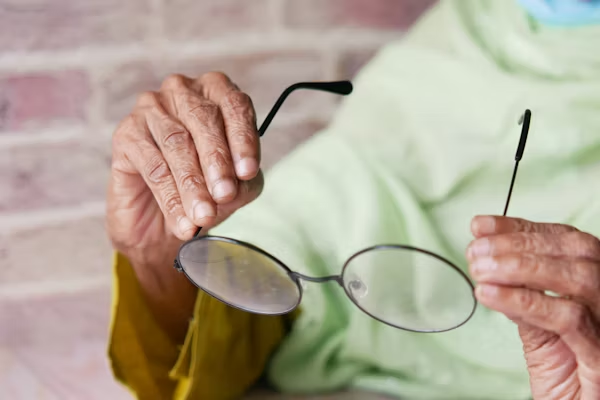
Seniors with low vision face unique challenges that impact their daily routines and overall safety at home. Managing tasks like cooking, navigating their living spaces, and reading labels becomes more difficult, increasing the risk of accidents and loss of independence. In-home care in Indiana offers specialized support tailored to these needs, helping seniors maintain their safety and autonomy. In-home caregivers use strategies such as home modifications, assistive devices, and clear communication to create a safer environment where seniors feel confident and supported. These tailored services empower older adults to live more independently while reducing the risk of falls and other injuries common among those with vision impairments. By combining the expertise of professional caregivers with personalized attention, families in Indiana can ensure their loved ones receive the care necessary to thrive despite vision loss. This approach also provides emotional support and companionship, both vital to well-being. For more on this topic, see how in-home care helps seniors with vision loss in Indiana. Understanding Low Vision in Seniors Low vision in older adults often results from specific eye conditions that progressively affect sight. This impairment can significantly alter how seniors perform daily activities and influence their overall quality of life. Identifying the causes, impacts, and signs is essential for timely support and care. Common Causes of Vision Loss in Older Adults Several eye diseases are the primary contributors to vision loss among seniors. Cataracts cause clouding of the eye’s lens, leading to blurry or dim vision that worsens over time. Glaucoma involves increased pressure inside the eye, which damages the optic nerve and can lead to irreversible vision loss if left untreated. Macular degeneration affects the central part of the retina, impairing the ability to read, recognize faces, and see fine details. Diabetic retinopathy results from diabetes-related damage to retinal blood vessels, causing fluctuating and often deteriorating vision. Regular eye exams can detect these conditions early, allowing for treatments that may slow progression. Impact of Visual Impairment on Daily Life Vision impairment significantly affects seniors’ ability to perform everyday tasks safely and independently. Activities such as reading, cooking, and managing medications become challenging or hazardous. Reduced sight also increases the risk of falls and accidents within the home. Social engagement suffers when seniors struggle to recognize faces or navigate unfamiliar environments. This can lead to isolation and emotional distress. Maintaining independence often depends on adapting living spaces and routines to accommodate shifting vision needs, using tools like magnifiers, high-contrast labels, and improved lighting. Recognizing Signs and Symptoms of Low Vision Early identification of low vision is critical to effectively managing the condition. Seniors may report difficulty reading small print or recognizing faces, even with glasses. They might experience frequent headaches, eye strain, or trouble adjusting to changes in light. Other symptoms include blurred or distorted vision, loss of peripheral sight, and increased sensitivity to glare. Family members and caregivers should watch for behaviors like reluctance to move around independently or sudden withdrawal from activities. Prompt professional evaluation helps determine specific causes and the best course of action. For more detailed information on managing vision loss and improving safety, see how in-home care supports seniors with low vision in Indiana. Key Challenges for Seniors with Low Vision Low vision in older adults creates distinct difficulties that affect daily routines, emotional well-being, and overall life satisfaction. Addressing these challenges requires a clear understanding of how vision loss affects safety, social engagement, and everyday activities. Reduced Independence and Safety risks Seniors with low vision often face increased risks of falls and accidents at home due to difficulty navigating unfamiliar or cluttered spaces. Tasks such as cooking, medication management, or using household appliances become more hazardous without clear visual cues. Reduced ability to read labels, medication instructions, or warning signs can further compromise safety. This loss of independence may lead to reliance on caregivers or family members for routine tasks, affecting their self-confidence. Home modifications like improved lighting, contrasting colors on important objects, and organizing spaces to minimize obstacles can help maintain safety. In-home care services in Indiana often focus on creating secure environments for seniors, supporting their ability to live independently as much as possible. Emotional and Social Implications Vision loss impacts emotional health by increasing feelings of isolation and depression among seniors. Difficulty recognizing faces, reading social cues, or engaging in hobbies can lead to withdrawal from social activities. Without sufficient emotional support, older adults may experience frustration or anxiety related to their decreasing abilities. This can affect motivation to participate in community events or maintain relationships. In-home caregivers provide companionship and help with accessing social opportunities to reduce loneliness. Emotional support tailored to vision-related challenges helps preserve dignity and promotes mental well-being. Barriers to Quality of Life Low vision can substantially limit engagement in meaningful activities that contribute to quality of life, such as reading, crafts, or watching television. Loss of these interests decreases mental stimulation and life satisfaction. Inability to perform everyday tasks independently also affects nutrition, hygiene, and mobility, compounding health issues. Seniors may struggle to adapt without specialized tools or training. Providing aids like magnifiers, talking devices, and tailored activities can improve function. In-home care programs in Indiana frequently emphasize empowering seniors with low vision to maximize their abilities and maintain a fulfilling lifestyle. Regular consultations with vision specialists also support sustained quality of life through adaptive strategies. Role of In-Home Care in Indiana In-home care services provide seniors with low vision with the support they need to maintain safety and independence at home. These services focus on personalized assistance tailored to each individual’s daily challenges and preferences. Benefits of In-Home Care for Low Vision In-home care helps reduce risks associated with vision loss, such as falls and medication errors. Caregivers assist with tasks like meal preparation, housekeeping, and safe navigation around the home. This personalized help ensures seniors maintain autonomy without compromising their safety. Emotional support and companionship also improve mental well-being, which is crucial for low-vision seniors who may experience isolation. Access to transportation and errand assistance enables continued engagement